How to sit at the computer: Ergonomics for kids doing schoolwork at home
Oh my aching back…
Right now, with schools closed, kids of all ages are doing schoolwork at home. Technology has allowed continuation of learning and even face-to-face check in with teachers. But it also poses some challenges. School classrooms are designed for children; our kitchen tables are not. How to sit at the computer? Just as we require ergonomic workstations for our jobs; we need to consider proper fit and alignment for our children as they learn virtually. The following are basic ergonomics for kids doing schoolwork from home that can prevent muscle aches and fatigue.
Where to place the computer screen:
Place the computer screen directly in front of your child with the eyes level with a spot about 2-3” below the top of the screen. In addition, place the keyboard so that the upper arms and shoulders are relaxed. The forearms should be parallel to the floor and the elbow bent less than 90 degrees. The chair should have back support and allow the thighs to be supported parallel with the floor. Knees should also be bent to 90 degrees or a bit less with feet supported. This can be a challenge for our elementary school kids who are trying to work at home. The Canadian Safety Council suggests: “choose a chair that places the child at the proper height in relation to the equipment. If that means a higher chair, provide a footrest to support the feet and a pillow to support the back.”
How can you adjust the chair?
Chairs with adjustable seat and footrest heights are great for this. If you don’t have an adjustable chair, you may need to create a footrest out of a box, block or storage crate. Also, since many children are using laptops, it is difficult to position both the screen and keyboard appropriately; it may be best to attach a separate monitor at the right height once the keyboard is set for proper arm and body position.
Avoid back and neck pain:
If children are using an iPad or reading a textbook, an angled book holder may help with proper positioning to avoid back and neck pain. We have cookbook holders for a reason!
If your child is doing lots of writing or drawing:
An angled writing surface will help with fatigue and proper support. There are quite a few child sized desks available with a surface that raises to an angle. If you child is a wiggler; consider a ball chair with an appropriate height table that allows for that 90-90-90 ankle, knee, hip alignment, or consider using a standing desk. In each case, the keyboard, mouse and screen still need to be adjusted for alignment as above.
The most important thing you can do is make sure your kids take a break and MOVE every 30 minutes according to both the Cornell University Ergonomics Web and Canada Safety Council. Active breaks are necessary not just for the body, but for the eyes as well. The best ergonomics for kids doing schoolwork at home cannot substitute for these breaks.
Here are some ideas for quick movement breaks to keep the aches and pains away:
- Stand and stretch arms up overhead. Grasp hands interlocking fingers, flip palms up to the ceiling and stretch.
- Bring arms behind your back at hip height, grasp hands or hand to wrist and try to pull shoulder blades down and together.
- Stand with hands against a wall, place one leg back with knee straight and foot flat on the floor. Keeping your body straight like a board, lean into the wall and stretch the back of the calf.
- If you have a yoga ball, lie back over the ball with feet flat on the floor, raise your arms out to the sides like a “T” and take some deep breaths.
- Go outside in the yard and play!
- No yard? Raining? Have a dance party or play “Simon Says.”
Stay home. Stay safe… and keep moving.
Deborah Stack, PT DPT PCS
©2020 Two Peds in a Pod®
We thank Dr. Stack for contributing to twopedsinapod.org— Drs. Lai and Kardos
Dr. Stack is a board certified specialist in pediatric physical therapy and the owner of the Pediatric Therapy Center of Bucks County, LLC in Doylestown, PA. In addition to treating children ages 0-21 for conditions such as torticollis, coordination, neurologic and orthopedic disorders, she also instructs physical therapists across the country in pediatric development and postural control and is a Certified Theratogs fitter.

 Now that school has been in session for over a month, it’s not too early for you to
 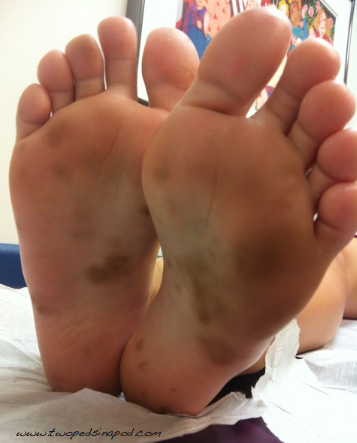 What causes brown spots on feet? In the summer, we see kids with these spots on their feet or hands. Read on for the answer behind the mysterious spots.
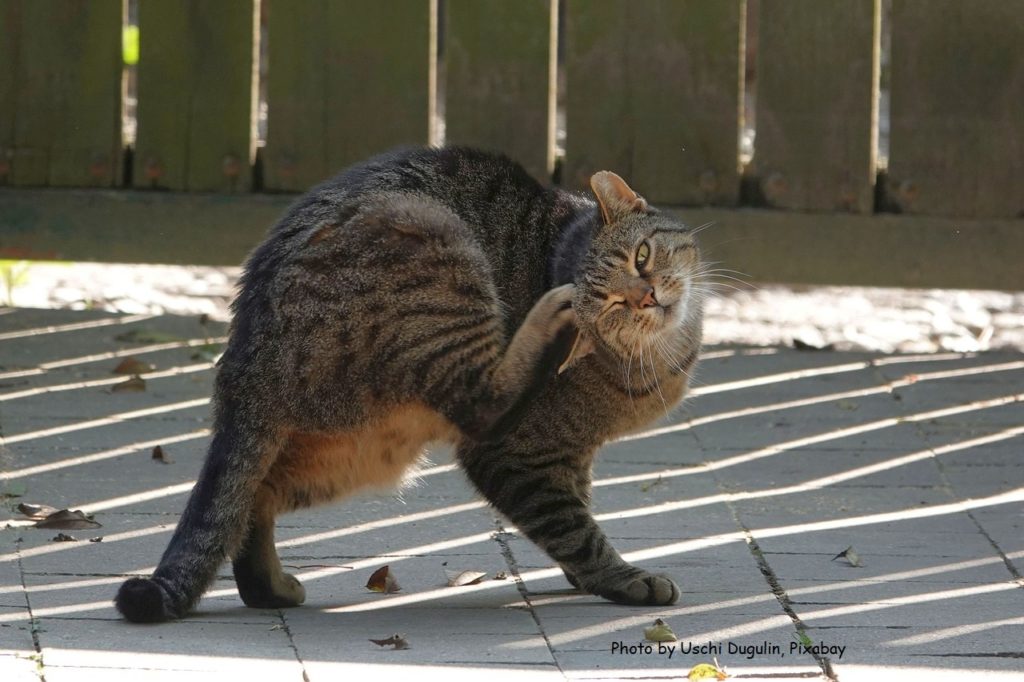 It’s pretty annoying to be itchy. Dr. Lai fondly called her itchy oldest child with eczema “itchy, bitty, spider,”or some variant of that, for much of her daughter’s childhood. Fortunately, for your kids with sensitive skin, dermatologist
  The type of moisturizer you select is very important. It is best to use an ointment (like plain unscented Vaseline™ or Aquaphor™) or a heavy cream (like Vanicream™, CeraVe™ cream, Cetaphil™ cream, or Aveeno™ Baby Eczema Therapy Moisturizing cream, to name a few). Lotions are poor choices because they tend to contain more preservatives and ingredients that can sting open skin or cause irritation.
 Apply moisturizer to the skin at least twice daily, but more often if the child’s skin is unusually dry or the eczema is severe. Apply topical medications sparingly to the affected areas prior to the application of moisturizer. I recommend applying topical medications twice daily, but you should follow the instructions given by your child’s doctor. It is very important that medications are applied only to areas of active eczema and never to normal skin. Apply moisturizer to all skin, including over the areas where you already applied medication.
 Do you wonder if any communication actually occurs when you talk to your teen? We invite you to